Congenital Pseudarthrosis of the Tibia (CPT) – Treatment at the Paley European Institute
Regain your mobility, freedom of movement, and a full sense of the ground beneath your feet, thanks to the direct connection between the prosthesis and the bone.
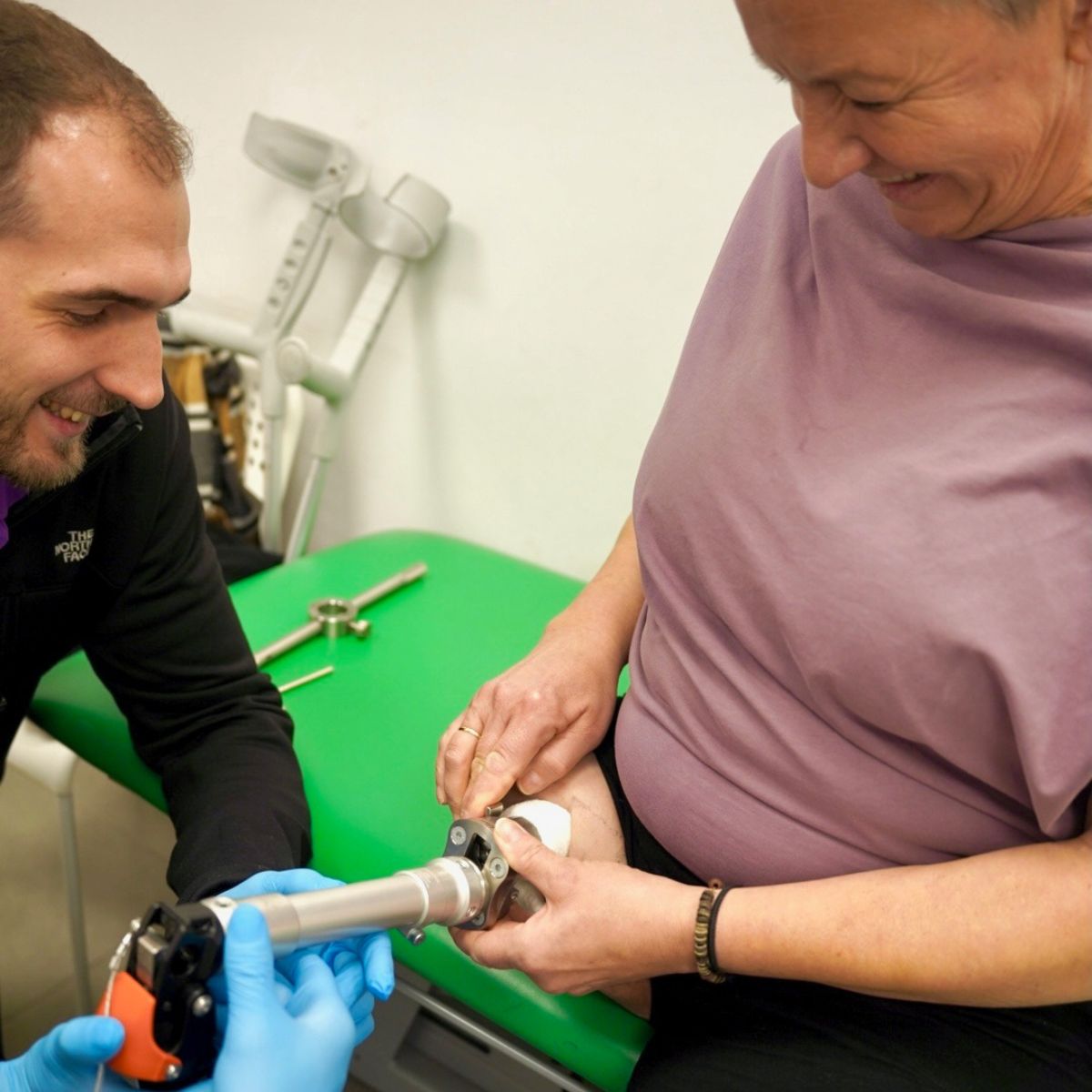
Osseointegration is a modern prosthetic method that eliminates the need for a traditional prosthetic socket. Instead of attaching the prosthesis to the residual limb, you secure it directly to an implant embedded in your bone. This solution restores a quality of life to amputees that they could previously only dream of
What are dysplasias and musculoskeletal disorders?
Dysplasias and congenital disorders of the musculoskeletal system are conditions in which the normal development of the musculoskeletal system is disrupted during fetal life or becomes apparent in early childhood. They encompass a wide spectrum of conditions—ranging from abnormal joint structure, through disorders of bone growth and mineralization, to rare congenital defects leading to limb deformities. The common thread among these conditions is their progressive nature: if left untreated, they eventually lead to increasing instability, pain, limb shortening, and impaired musculoskeletal function.
Early diagnosis and comprehensive treatment at a specialized center are crucial for the prognosis—especially in children, whose skeletal systems are still developing, and where timely treatment can prevent permanent deformities and amputation.
What is CPT?
Congenital pseudarthrosis of the tibia is a rare, serious orthopedic condition in which the tibia undergoes abnormal bending and subsequently a pathological fracture. At the site where natural bone healing should occur, instead of a permanent bony union, a pathological, mobile joint—known as a pseudarthrosis—forms. This mobility is completely abnormal and should not be present in healthy bone.
CPT occurs in 1 in 190,000 people and affects both girls and boys. The condition most often becomes apparent in early childhood, and an acute fracture usually occurs before the age of 2.
Association with Neurofibromatosis
Nearly half of children with CPT also have neurofibromatosis—some of them have neurofibromatosis type 1 (NF1, von Recklinghausen disease). This is important diagnostic information, as the co-occurrence of NF1 affects the choice of treatment and the prognosis.
Osseointegration: A Modern Life Without Limitations After Limb Amputation
Regain natural control over your movement with technology that fuses the implant directly to your bone.
Osseointegration is a groundbreaking alternative to traditional dentures. Instead of pressure and chafing, we offer a stable, permanent bond between the implant and the bone (a denture-free system). At the Paley European Institute, we restore what is most precious to our patients: confidence in their step, a sense of the ground beneath their feet, and the comfort of everyday life.
More Than Just a Procedure: A Comprehensive Rehabilitation System Many people view osseointegration solely as a surgical procedure. For us, it is a precisely planned therapeutic process that guarantees safety and predictable results. Our standard of care includes:
Individualized assessment: We analyze your anatomy and treatment history to select a solution perfectly tailored to your needs.
International surgical protocol: We use advanced implant placement techniques to minimize the risk of complications.
Mechanobiological adaptation: We ensure that your bone and the implant become one, providing a durable foundation for the prosthesis.
Specialized rehabilitation: We guide you step by step through learning to walk and fully weight-bearing on the limb under the supervision of experts.
Prosthetic consultation: Selection of prosthetic components to maximize function and tailor the prosthesis to your individual needs and expectations.
Long-Term Success and Our Proprietary Care Model: By choosing osseointegration at our Institute, you’re opting for a proven, comprehensive system. We combine world-class surgical procedures with a dedicated rehabilitation plan and a long-term care plan. This approach ensures a lasting improvement in your quality of life and the full, safe integration of the implant with your body; you become part of the “Paley Family” for many years to come.
