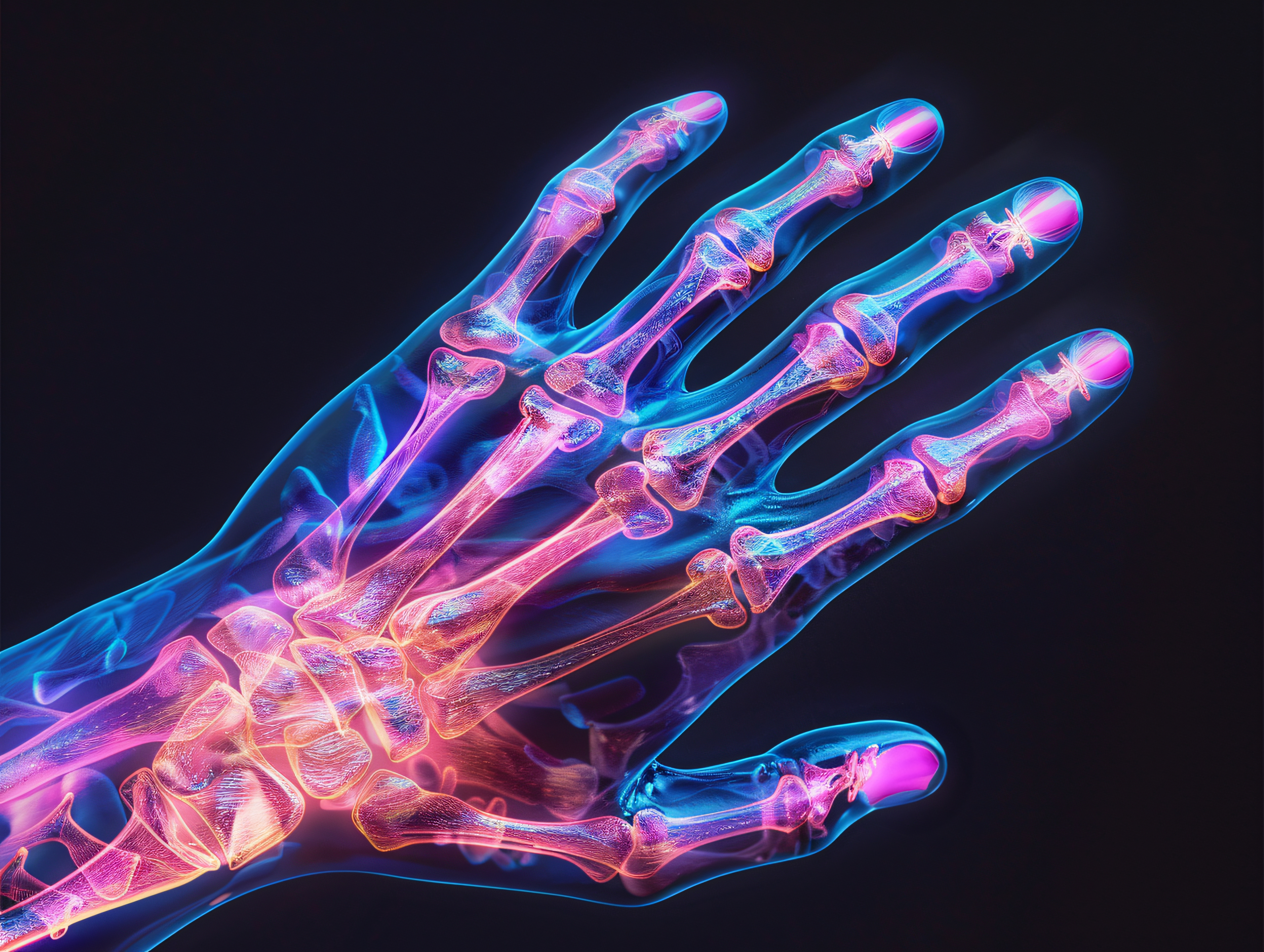
Osseointegration: A New Era in Post-Amputation Rehabilitation. An Interview with Jacek Tadrzak
Modern regenerative and orthopedic medicine is increasingly turning to solutions that, just a decade ago, seemed like the stuff of science fiction. One of the most groundbreaking fields is osseointegration—a method that redefines the concept of a “prosthesis” and restores lost dignity and mobility to amputees. Jacek Tadrzak, an experienced physical therapist at the Paley European Institute who has been accompanying patients through this extraordinary transformation for six years, discusses what the process of returning to a life free of pain and limitations looks like.
Check:
- What is osseointegration? The end of the era of the denture base
- Preparation and Qualification: Teamwork
- The First 24 Hours and Learning to Apply Load: The Path to Full Fitness
- The Phenomenon of Osseoperception: Sensing the Ground Through Metal
- A new identity and a return to social life
What is osseointegration? The end of the era of the denture base
For most amputees, the greatest challenge in daily life is not the loss of a limb itself, but the need to use a traditional prosthetic socket. Although this solution is common, it comes with a number of problems: painful chafing, excessive sweating, instability, and difficulties in adapting the prosthesis to the shape of the residual limb, which changes with age. Osseointegration completely eliminates these inconveniences.
As Jacek Tadrzak explains, the procedure involves inserting a porous titanium implant directly into the bone marrow cavity. Thanks to this process, the implant eventually “becomes one” with the patient’s body. Instead of a compression socket, the patient receives a stable adapter protruding from the limb, to which the prosthesis can be attached in just a few seconds. This solution is primarily intended for people with high amputations, for whom standard prostheses have proven uncomfortable or even impossible to use.
Preparation and Qualification: Teamwork
The decision to undergo osseointegration is the first step on a journey that requires the commitment of the entire medical team. At the Paley European Institute, this process is meticulously planned. Qualification is not based solely on the surgeon’s opinion—the input of the physical therapist and orthotist is equally important. Jacek Tadrzak emphasizes that his role begins long before the surgery. During the consultation, he assesses the patient’s range of motion, muscle strength, and gait.
An important component is what is known as prehabilitation. If the patient is overweight, a weight-loss program is implemented; if the joints are stiff, specific exercises are designed to prepare the body for new physical demands. At the same time, the orthotist assesses the patient’s needs: whether the prosthesis is intended solely for basic mobility or for participating in sports such as skiing or running. This holistic approach instills a sense of security in patients and helps them understand each “milestone” they will need to achieve following the procedure.
The First 24 Hours and Learning to Apply Load: The Path to Full Fitness
Many patients are anxious about the moment when they will have to put weight on their leg with the implant for the first time. Jacek Tadrzak reassures them, however, that postoperative rehabilitation begins immediately—as early as the first or second day after surgery. This process is based on precise weight-bearing protocols. It starts with a small amount of pressure, around 5 kg, to gradually acclimate the bone and implant to the load.
Typically, after about two to three weeks, the patient regains 50% of their body weight, and by the eighth to tenth week, they are ready for full weight-bearing. The physical therapist acts as a guardian of the process—ensuring that patients, encouraged by the absence of pain, do not rush their rehabilitation too quickly. It is crucial to avoid rotational movements in the first few weeks, as this could interfere with the process of bone fusion with the titanium implant. Only after confirmation through X-rays is the patient ready to begin learning dynamic walking, navigating obstacles, and using stairs.
The Phenomenon of Osseoperception: Sensing the Ground Through Metal
One of the most fascinating aspects of osseointegration is the phenomenon of osseoperception, or the restoration of deep sensation. In a traditional denture, the patient is separated from the underlying bone by layers of plastic and silicone. With an implant integrated into the bone, every vibration and touch is transmitted directly to the skeleton.
Jacek Tadrzak notes that patients can accurately determine the type of surface they are walking on—whether it is a soft carpet, hard asphalt, or loose gravel. This “sense of the leg” in space gives them incredible confidence and makes the prosthesis cease to be a foreign tool and become an integral part of their body schema. For many people, it is precisely this moment—when they “feel” the ground beneath their feet again—that is the most moving stage of the entire treatment.
A new identity and a return to social life
Osseointegration is not just a technical revolution; above all, it is a psychological transformation. Patients who have struggled with pain and social withdrawal for years suddenly regain their independence. Jacek Tadrzak recalls stories of people who, after the procedure, began pursuing passions previously out of reach for them, such as skiing. The shift from “a life of pain” to “a life at the click of a button” (quickly attaching the prosthesis) translates into a huge boost in self-confidence.
Although living with an implant requires good oral hygiene—specifically, taking care of the area where the implant emerges from the gum—the benefits of this method are incomparable to those of traditional dentures. Thanks to specialists like Jacek Tadrzak and the innovative approach of the Paley European Institute, osseointegration is no longer a taboo subject but has become a real opportunity for a fulfilling life for amputees in Poland and Europe.
See other entries
How to Properly Care for a Stump After Amputation? A Practical Guide
Hollow Foot – Symptoms, Causes, and Treatment Options