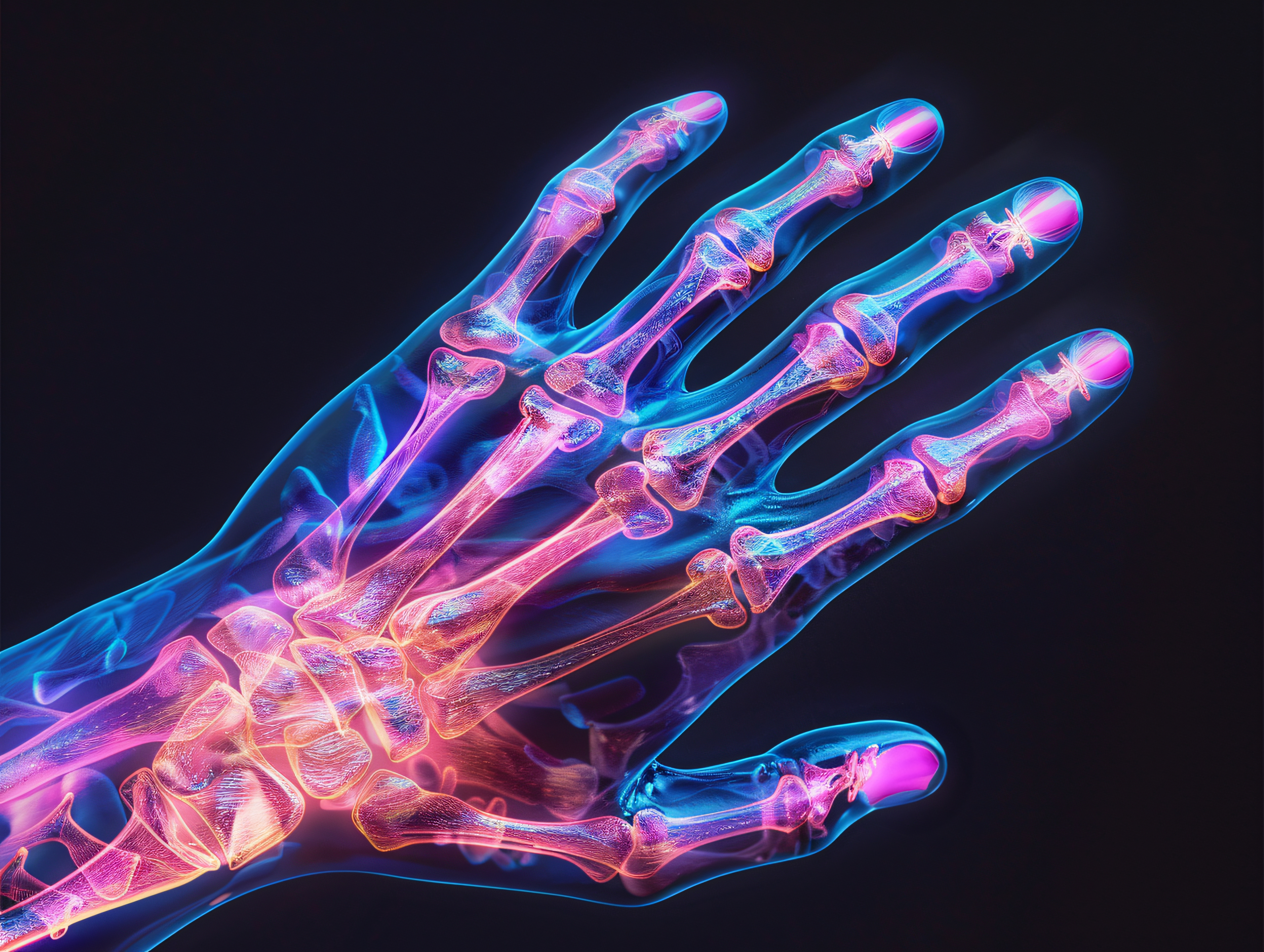
Achondroplasia
Achondroplasia is the most common form of chondrodysplasia, a disorder of epiphyseal cartilage growth. It is genetically determined. It is a disorder associated with shortening of the proximal parts of the limbs (arms and thighs) and deformities in the upper extremities. The bones of patients are shorter, which significantly affects their height. Adult women reach an average of 124 cm, and men 131 cm. In addition to short stature, joint and spinal deformities are a problem in patients with achondroplasia.
Achondroplasia is a symptom that includes short stature , knee sparseness, short arms and legs that are out of proportion to the size of the head, joint and spinal deformities. Large head with protrusion of the frontal bone, abnormal development of the middle part of the face or lumbar hyperlordosis may also appear. Importantly, achondroplasia can be diagnosed on the basis of clinical and radiological features, and its causes are genetic and involve the presence of mutations in FGFR3.
Achondroplasia occurs in 1 person in about 25,000 births. 80% of low-grade individuals are children of parents with average height and no history of such cases in the family. Compared to the general population, the life expectancy of people with achondroplasia is only slightly lower.
Problems of people with ACH
People with achondroplasia face many problems due to their short stature. Often they can't find appropriate footwear, have difficulty adjusting furniture, ATMs, cars or bicycles, and are even at risk of injury through inadequately placed airbags. Public facilities are ill-suited to them - light switches, public restrooms, store shelves and entrances to public transportation are placed too high.
People with ACH also face less social acceptance. Some jobs are not available to them, or it is difficult for them to fulfill the full range of duties for a particular specialty. Through their short stature, they often face yuppification, that is, being perceived as younger than they really are, which results in a presumption of less competence, thus setting the bar below the skills and lower expectations of the short person. All of these factors can lead to emotional difficulties that often develop into emotional problems, such as attention problems, depressive symptom syndrome, anxiety or somatic pains.
People with ACH are often ridiculed, finger-pointed at or treated differently from everyone else, such as disrespectfully. They are excluded from social interactions, group activities at school, sports or other extracurricular activities. The way that short people are portrayed in the media plays a big role in how they are perceived by the rest of society. Unfortunately, they are often portrayed as characters that allow society to mock and laugh at anyone who is short in stature.
It is important to change these practices and introduce other anti-discrimination solutions. Among these can be highlighted universal design, which allows products and environments to be accessible to all users without special adaptation. It is also important to educate the public, to discuss anti-discrimination against people with disabilities and the relevance of making changes.
Associated disorders
Achondroplasia is often accompanied by other general disorders that require treatment. Therefore, multispecialty care is necessary. Prominent among these are:
- neurological disorders,
- Muscular hypotonia;
- central apnea;
- delayed development;
- chest constriction;
- cardiovascular disorders;
- obstructive sleep apnea;
- Hearing loss associated with chronic otitis media
- joint hypermobility;
- crowding of teeth;
- obesity;
- Axial deformities of the lower extremities.
Despite delayed development, intellectual and cognitive abilities in children with achondroplasia are normal.
Diagnosis and occurrence
The diagnosis is made based on the presence of characteristic clinical and radiological features. The diagnosis can be confirmed by molecular genetic testing, demonstrating the presence of mutations in FGFR3. It is possible to make an incidental prenatal diagnosis during routine ultrasound in the 3rd trimester of pregnancy.
Achondroplasia - treatment options
Knowing: achondroplasia - what it is, one can move on to the ways of its treatment. At the outset, it is worth noting that achondroplasia in children is a condition that makes it difficult to perform selected social and professional roles. To improve quality of life, we recommend treatment in the form of surgical procedures, such as lengthening of the upper and lower extremities and joint reconstruction. For achondroplasia, in addition to surgical treatment, we also offer rehabilitation (pre- and post-operative).
Nowadays, drugs are also being introduced that, when used in properly qualified patients, increase the final height achieved. However, still in some cases of achondroplasia, causal treatment is not possible. What can be done, however, is surgical correction of axial deformities of the lower extremities mainly myelomeningocele, as well as lengthening. Comorbidities should be treated, and the condition of the spine should be monitored - every person with ACH should have an X-ray at least once in his life. It is especially important not to put too much stress on a child's spine too early, and not to seat him or her until he or she is ready to do so on his or her own. Psychological and social support, as well as speech therapy, should also be considered.
Contact us today! Treatment of achondroplasia, rehabilitation and pediatric orthopedics is our specialty. We also treat other conditions, including diastrophic dysplasia.
See other entries
How to Properly Care for a Stump After Amputation? A Practical Guide
Hollow Foot – Symptoms, Causes, and Treatment Options