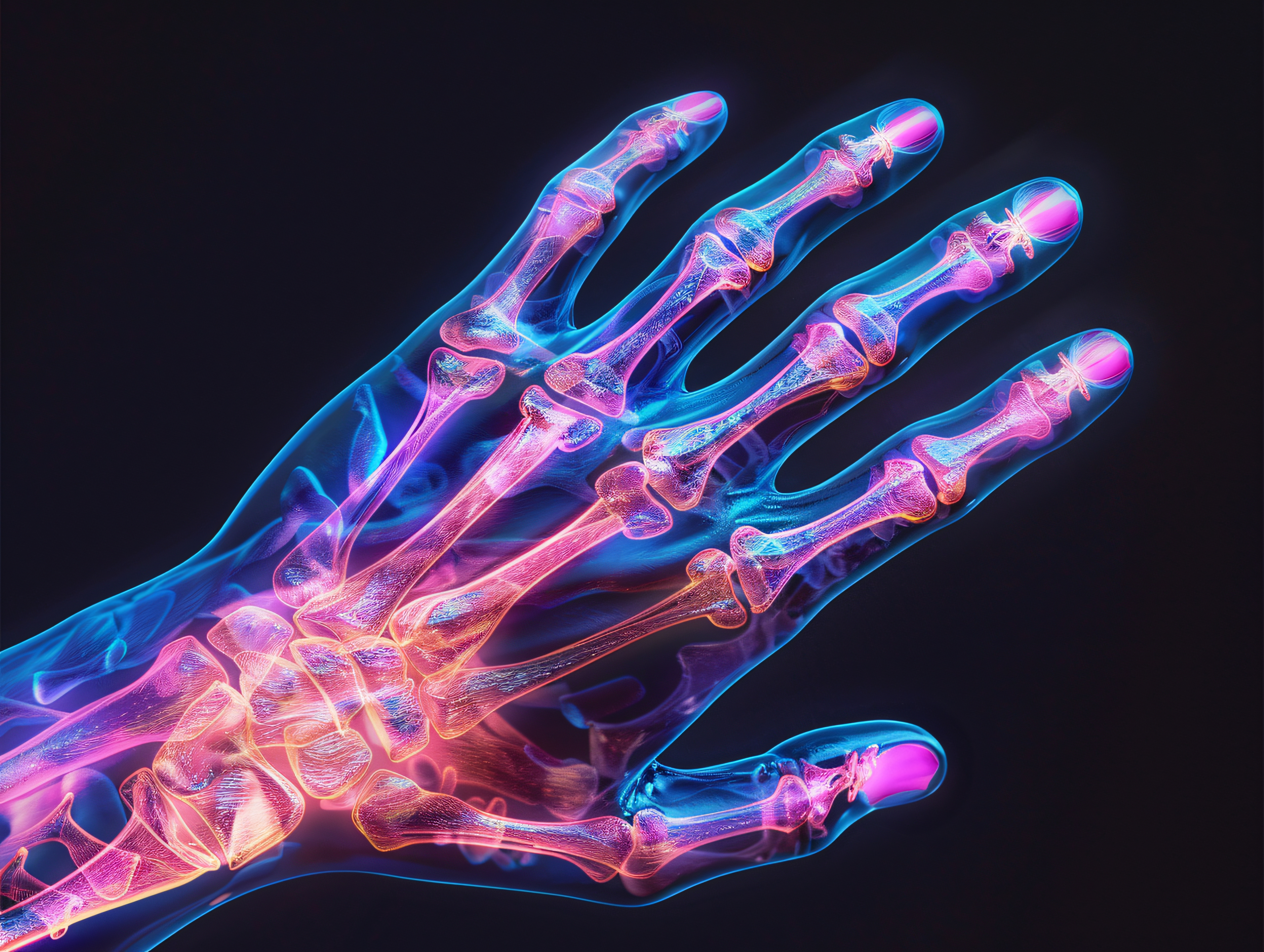
Osteoarthritis
Osteoarthritis (OA) is the most common disease of the musculoskeletal system. In its course, there is damage to structures and impairment of joint function, as well as the appearance of pain. It arises as a result of mechanical and biological factors. Clinically, CAD is characterized by joint pain, pressure soreness, restricted mobility, crackles and sometimes effusions. It more often involves the knees, hips, spine and small joints of the hands than elbows, ankle joints and wrists. It usually involves one or more joints. Symptoms are secondary - caused by cartilage and bone breakdown products. They are not accompanied by systemic symptoms.
Osteoarthritis is the most common cause of joint complaints. An estimated 2 million people in Poland suffer from it. Symptomatic osteoarthritis of the knee joints is found in 7-17% of people over 45, of the hip joints in about 9% of people over 45, and of the hand joints in about 7% of people over 25.
The underlying cause of CAD is excessive overloading of the joint. Not only do disorders of the biomechanics of the joint play an important role in the development of the disease, but also changes in the physicochemical properties of cartilage and other joint tissues. These disorders can lead to damage that exceeds the body's repair capacity. So how does the treatment of arthritis proceed?
Risk factors for CAD include, but are not limited to:
- Age >40 years,
- female gender,
- genetic factors,
- Overweight, obesity,
- Increased bone mineral density,
- postural defects,
- muscle weakness,
- low physical activity,
- injuries and micro-injuries,
- Fractures and abnormal bone fusion,
- ligament damage,
- hard physical work,
- occupation - farmers, jackhammer operators and dancers, among others, have an increased risk of contracting CAD,
- Engaging in competitive sports,
- estrogen deficiency,
- smoking cigarettes,
- inflammatory joint diseases.
A distinction is made between degenerative disease:
- primary-anidiopathic condition developing within previously intact joints, without a specific initiating factor;
- Secondary-it is diagnosed when there are factors that cause damage to joint structures, abnormalities in the structure of the joint or predisposing conditions.
Depending on the location of the lesions, we distinguish:
- local form,
- generalized form.
Typical symptoms of osteoarthritis are:
- pain - at the beginning it is slight, of variable intensity and is felt only with movement, and is alleviated during rest; in advanced stages there may be rest pain and night pain, preventing sleep; deformities and widening of the bony contours of the joint are then often found,
- krótkotrwała sztywność stawu po okresie bezruchu (<30 min),
- Limiting the range of motion in the joint,
- deformation and widening of the joint outline,
- joint effusion,
- joint instability,
- Crackling in the joint during movement,
- gait disturbances,
- Muscle atrophy or muscle weakness.
The degree of disability depends on the location and severity of the degenerative changes. Hip joint involvement is particularly poor prognosis, due to reduced mobility. The condition is progressive, regardless of conservative treatment. Although progression of degenerative changes in the affected joints is observed with age, some patients experience stabilization of the disease and even a reduction in pain. In the course of osteoarthritis, symptoms from other organs and systems are not observed.
Diagnostics
Making a diagnosis of CAD requires a detailed history and a thorough physical examination. Imaging studies (X-ray, MRI, others), as well as laboratory tests, should also be performed. Other diseases should also be ruled out before the diagnosis is made, including psoriatic arthritis, rheumatoid arthritis, gout, ankylosing spondylitis, soft tissue rheumatism, joint infection, and cancer.
COD - treatment
Is it possible to treat osteoarthritis? At this time, there are no symptomatic treatments available. Therefore, the main goal of therapeutic management is to reduce pain, preserve or improve joint function and reduce disability. Efforts should be made to minimize or exclude the causes of CAD - risk factors, which can be helped by adult orthopedics. There is a branch of medicine that also deals with other conditions, such as: tibial hemimelia, dysplasias of the skeletal system, or clubfoot.
In each case, treatment should be tailored to the individual. Non-pharmacological management, which includes education, psychotherapy, diet therapy and physiotherapy. At Paley European Institute, we provide comprehensive treatment and physiotherapy for people with osteoarthritis. WHAT's more, the following is also available with us pediatric orthopedics.
See other entries
How to Properly Care for a Stump After Amputation? A Practical Guide
Hollow Foot – Symptoms, Causes, and Treatment Options