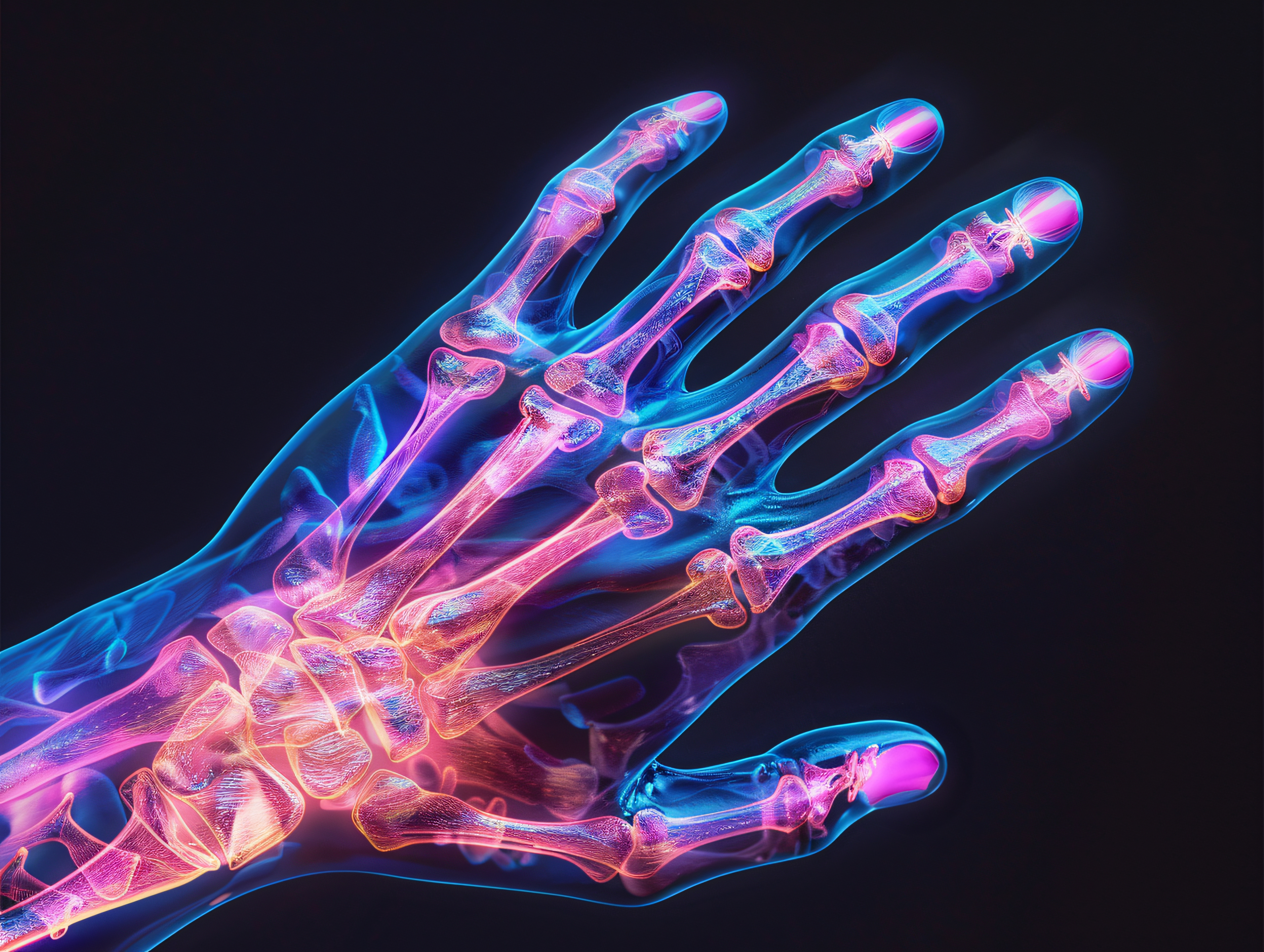
Skeletal Dysplasias: Types, Symptoms, and Early Diagnosis – What Every Parent Should Know
Is your child growing differently than their peers? Do their limbs seem disproportionately short? Are they already experiencing joint pain in preschool? It could be skeletal dysplasia—a congenital bone development disorder that requires early diagnosis and specialized care.
What are skeletal dysplasias?
Musculoskeletal dysplasias are a group of congenital developmental disorders of the musculoskeletal system that affect the growth and development of bones, cartilage, and other connective tissues. They are characterized by abnormal bone growth, which can lead to skeletal deformities and abnormalities in body proportions.
These diseases are usually genetic in nature—they are caused by mutations in the genes responsible for the development of cartilage and bone. They can vary significantly in severity, ranging from mild forms that are almost unnoticeable in daily life to severe cases requiring many years of comprehensive treatment.
Developmental abnormalities of the musculoskeletal system in children and adolescents often develop insidiously, painlessly, and without symptoms. If left without early diagnosis and treatment, they worsen as the child grows, leading to early degenerative changes and permanent functional limitations.
The Most Common Types of Skeletal Dysplasia
Achondroplasia
The most common genetically determined form of dwarfism, caused by a mutation in the FGFR3 gene. It is characterized by shortened limbs with a normal-length trunk and an enlarged head with a distinctive forehead. Patients may also have increased lumbar lordosis and knock-knees. The diagnosis can be made prenatally—based on ultrasound and genetic testing.
Pseudoachondroplasia
Caused by a mutation in the COMP gene. Unlike achondroplasia, symptoms are not apparent immediately after birth—they develop gradually between the ages of one and three. Characteristic features include impaired growth of the long bones, excessive joint mobility, and early-onset osteoarthritis, particularly of the hips and knees.
Hypoachondroplasia
A milder form of achondroplasia, also caused by a mutation in the FGFR3 gene. The symptoms are similar but less severe—patients grow to a greater height. The diagnosis is often made late due to the more subtle clinical presentation.
Multifocal Bone Dysplasia (MED)
A disorder of epiphyseal cartilage development leading to abnormal formation of long bones and joints. It most commonly affects the hips, knees, ankles, and shoulders. Symptoms—pain, limited mobility, and deformities—appear during childhood, as physical activity begins.
Diastrophic dysplasia
A rare disease caused by a mutation in the SLC26A2 gene. It is characterized by short stature, shortening of the long bones, joint deformities, and clubfoot. It is often accompanied by thumb contracture and deformities of the auricles. Children require specialized orthopedic care from birth.
Stickler syndrome
An inherited connective tissue disorder caused by mutations in collagen genes (COL2A1, COL11A1, COL11A2). It affects not only the bones and joints, but also the eyes (risk of retinal detachment), ears (hearing loss), and the palate. It requires multidisciplinary care.
Vertebral-epiphyseal Dysplasia
A disorder characterized by abnormal development of the vertebral structures and bone epiphyses (often referred to as a group of conditions on the borderline of skeletal dysplasias). Abnormal formation of cartilage and/or bone occurs in the growth plates, leading to postural abnormalities, spinal deformities, and abnormal joint development.
McKusick Syndrome
A rarely described or classified genetic congenital syndrome characterized primarily by abnormalities in skeletal development. In practice, it presents as osteoarticular dysplasia, that is, a disorder of bone formation and growth structures. It results in both deformities and functional limitations
Symptoms That Should Alarm Parents
Skeletal dysplasias can manifest with a variety of symptoms—depending on the type of condition and the child’s age. It is important to pay attention to:
• Disproportionate growth—limbs that are too short in relation to the torso (or vice versa)
• Bowed or knock-kneed legs – legs positioned in an X or an O shape
• Joint pain beginning in childhood, particularly in the knees, hips, and ankles
• Limited joint mobility or excessive joint laxity
• Abnormalities in the structure of the spine—lateral curvature (scoliosis), increased lordosis
• Specific facial features or skull structure (enlarged forehead, flat facial skeleton)
• Recurrent back pain, difficulty walking, abnormal gait
• In newborns: limb asymmetry, limited hip abduction, positive Barlow’s or Ortolani’s signs
These symptoms do not necessarily indicate dysplasia—but they always require an orthopedic consultation.
How is the diagnostic process conducted?
The diagnosis of skeletal dysplasia is based on several key factors:
• Clinical examination – assessment of body proportions, range of motion in the joints, posture, and gait.
• Imaging studies – X-rays of the limbs and spine allow for the assessment of bone shape and structure. In infants, an ultrasound examination of the hip joints according to the Graf classification is crucial.
• Magnetic resonance imaging (MRI)—particularly useful for evaluating articular cartilage and bone epiphyses.
• Genetic testing—identifying the mutation responsible for the disease helps confirm the diagnosis and assess the risk for siblings and offspring.
• Prenatal diagnosis—possible through ultrasound and genetic testing of amniotic fluid.
When should you see a specialist?
A pediatrician or orthopedist should evaluate the child if:
• The child’s growth deviates significantly from the percentile charts,
• The limbs are visibly disproportionate,
• The child complains of joint pain or difficulty walking,
• There is a family history of short stature or bone disorders,
• An ultrasound examination of the hips at 3 months of age revealed abnormalities.
Remember: early diagnosis and properly planned treatment are the foundation of a good prognosis. Skeletal dysplasias detected and treated in a timely manner allow children to develop, learn, play, and—as adults—lead active, independent lives.
See other entries
How to Properly Care for a Stump After Amputation? A Practical Guide
Hollow Foot – Symptoms, Causes, and Treatment Options