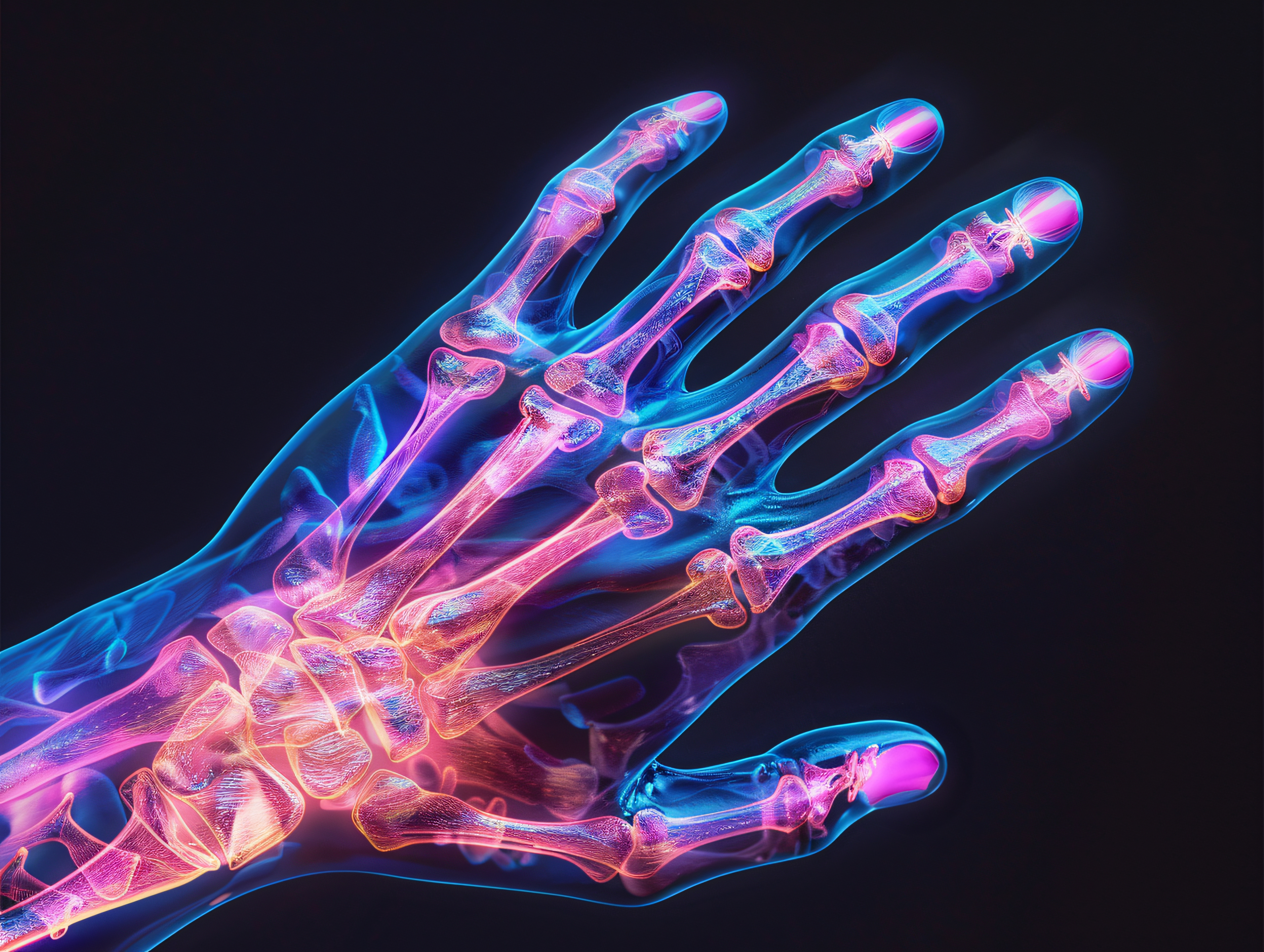
PRECICE – A Revolution in Limb Lengthening Without External Stabilizers
Limb lengthening is a procedure that, for decades, has been associated primarily with the Ilizarov method—that is, an external fixator, rods passing through the skin and bone, and a long, painful healing process. Today, however, more and more patients and surgeons are turning to a solution that eliminates most of these drawbacks: the PRECICE system. Its mechanism of action and clinical results are described in detail in an expert article by Dr. Dror Paley, published in Expert Review of Medical Devices.
What is PRECICE?
PRECICE is a fully implantable, remotely controlled, magnetically driven intramedullary nail designed for limb lengthening. Unlike traditional external fixators, the entire mechanism is located inside the bone—the patient does not wear any external device, and there are no wounds around the wires or risk of infection at the insertion sites, which are typical of the Ilizarov method.
The system received CE marking and approval from the U.S. FDA—first for the first-generation implant (2011), and then for the significantly improved PRECICE 2 version (2013). As of the publication of this article, it had already been used in over a thousand cases worldwide, and published results from more than 250 cases indicate less pain and a lower complication rate compared to external fixation methods and earlier generations of implantable nails.
How does it work?
At the heart of the device is a magnetic shaft connected to a set of gears, which in turn drives a threaded drive shaft. Control is provided by an external remote control unit (ERC) equipped with two rotating magnets. Placing the ERC against the patient’s thigh or lower leg causes—through magnetic coupling—the magnet inside the nail to rotate, which, depending on the direction of rotation, lengthens or shortens the implant. This is the first nail on the market with bidirectional control (lengthening and shortening), which sets it apart from earlier solutions.
Daily distraction therapy takes place at home—the patient or caregiver sets up the device on their own according to the doctor’s instructions, without the need for visits to have it manually adjusted, as was the case with external stabilizers.
Effectiveness confirmed by studies
The article cites several independent clinical studies. One of them, conducted by Kirane and colleagues, involved 24 patients who underwent femoral and/or tibial lengthening. The average lengthening was 35 mm, with an accuracy of 96% and a precision of 86%. All patients achieved the planned length, and the range of motion in the knee and ankle joints was only minimally restricted.
Another study, involving patients with congenital femoral hypoplasia and fibular hemimelia, showed similarly promising results—with well-preserved range of motion in the joints and predictable bone healing.
The device's evolution: from PRECICE to PRECICE 2
The first generation of the implant, despite its good results, had certain design flaws—there were instances of fractures at the housing welds, as well as cases where the mechanism was unable to overcome the resistance of the bone tissue. In response, in 2012, the Ellipse Technologies team, in collaboration with Dr. Paley, developed PRECICE 2—a weld-free version with four times the flexural strength, three times the axial load-bearing capacity, and a distraction mechanism three times as strong.
Why is this important?
Limb lengthening is not limited to post-traumatic injuries or congenital defects; it is also increasingly sought by patients looking to increase their height for aesthetic reasons. As the author of the article notes, the growing interest in these types of procedures—driven in part by social media—means that the market for limb-lengthening implants will continue to expand, and PRECICE, as a second-generation device, sets a new standard for safety and treatment comfort.
Source: Dror Paley, "PRECICE Intramedullary Limb Lengthening System," Expert Review of Medical Devices, 2015. Full text of the article: https://doi.org/10.1586/17434440.2015.1005604
See other entries
How to Properly Care for a Stump After Amputation? A Practical Guide
Hollow Foot – Symptoms, Causes, and Treatment Options