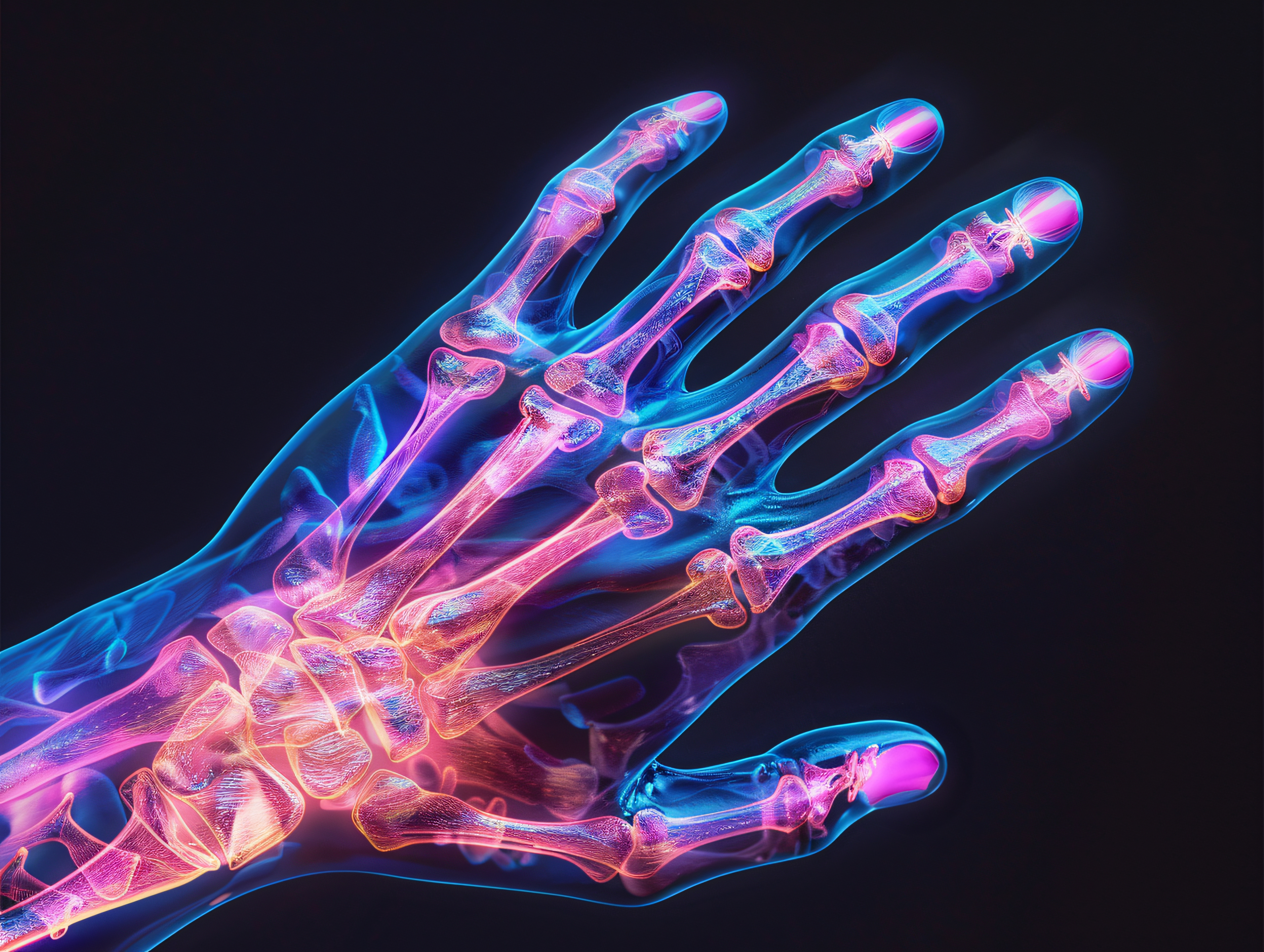
Rzekomy Pond – what is it?
What is a pseudarthrosis? In clinical orthopedic practice, one of the most challenging complications of bone healing disorders is pseudarthrosis. In many cases, it occurs as a result of abnormal bone union following a fracture or as a congenital defect. Understanding the mechanism of its development, as well as proper diagnosis and treatment, are of paramount importance for preserving limb function.
From this article you will learn:
- A temporary pond – what is it and how does it form?
- Causes of pseudoarthrosis
- Clinical symptoms and diagnosis of a pseudoarthrosis
- How should pseudoarthrosis be treated?
- Who treats pseudoarthrosis at the Paley European Institute?
- Summary. Comprehensive treatment at specialized orthopedic centers
A temporary pond – what is it and how does it form?
What is a pseudoarthrosis? This term refers to a situation in which proper bone healing does not occur at the site of a fracture. Instead of a stable bony union, a pathological structure resembling a joint forms. Within this structure, abnormal mobility occurs that should not be present physiologically.
From a pathophysiological perspective, it is important to note that the natural process of osteogenesis is interrupted in this condition. In normal fracture healing, fibrous callus forms first, followed by bony callus, which stabilizes the fracture fragments. In pseudarthrosis, this process is halted or disrupted, and fibrous or cartilage-like tissue develops between the bone fragments.
Pseudarthrosis occurs particularly frequently in the context of post-traumatic complications, but also in connection with congenital conditions. One of the best-known examples is congenital pseudarthrosis of the tibia (CPT). It is a rare condition that occurs in approximately one in 190,000 children and is often associated with type 1 neurofibromatosis.
Causes of pseudoarthrosis
The most common causes of pseudarthrosis include:
- disorders of the biological bone healing process,
- insufficient stabilization of bone fragments,
- infections at the fracture site,
- significant damage to soft tissues and blood supply,
- metabolic bone diseases,
- genetic factors and birth defects.
In a clinical context, pseudoarthrosis is also frequently described in connection with complications of high-energy fractures, where soft tissue damage and impaired microcirculation significantly limit the bone’s ability to regenerate.
A specific form of this condition is congenital pseudarthrosis of the tibia. In this case, the condition is associated with a developmental abnormality of the bone structure that occurs during fetal development. The bone is weakened, gradually bends, and eventually fractures. The fracture site does not heal, resulting in pathological mobility resembling a joint.
Clinical symptoms and diagnosis of a pseudoarthrosis
From a clinical standpoint, a pseudoarthrosis is a condition characterized primarily by:
- abnormal movement at the fracture site,
- chronic pain,
- limb instability,
- deformation of the bone axis,
- shortening of the limb.
In children, the first sign of the condition may be progressive bowing of the tibia, followed by a spontaneous fracture. The diagnosis of pseudarthrosis relies primarily on imaging studies. The standard test is X-ray imaging, which allows for the assessment of the absence of a bony bridge and the presence of fibrous tissue between the fragments. In more complex cases, computed tomography or magnetic resonance imaging is used.
At the Paley European Institute, we also perform detailed differential diagnosis. This allows us to determine whether a pseudoarthrosis is a complication of an injury, a congenital condition, or part of a broader medical syndrome.
How should pseudoarthrosis be treated?
How can pseudarthrosis be effectively treated? The treatment of pseudarthrosis is one of the most challenging procedures in reconstructive orthopedics. In many cases, surgery is the only effective treatment option. Depending on the type of condition, the following methods are used, among others:
- removal of pathological tissue at the site of the pseudarthrosis,
- bone grafts,
- intramedullary or external stabilization,
- reconstructive techniques that improve blood supply to the bone.
A particularly challenging condition is congenital pseudoarthrosis of the tibia. Among the modern treatment methods available is the cross-union technique, which enables the achievement of stable bone union. Highly specialized procedures of this type are performed as part of orthopedic surgeryat our institute, where we draw on the expertise of teams dedicated to treating the most complex skeletal deformities.
Comprehensive rehabilitation is also a key component of treatment. After surgery, it is essential to restore muscle function, joint stability, and a normal gait pattern.
Who treats pseudoarthrosis at the Paley European Institute?
At the Paley European Institute, patients with pseudoarthrosis are treated by a team of experienced orthopedic surgeons who specialize in reconstructive musculoskeletal surgery and the treatment of bone deformities.
One of them is Dr. Tomasz Albrewczyński—an orthopedic surgeon and pediatric orthopedist specializing in the treatment of musculoskeletal deformities, limb lengthening, and joint reconstruction. A graduate of the Medical University of Warsaw, he gained experience at institutions such as the Paley Institute in West Palm Beach, Florida. In his practice, he focuses on treating complex orthopedic conditions requiring advanced surgical procedures and modern reconstructive techniques.
Dr. Jarosław Michał Deszczyński, MD, PhD, an orthopedic surgeon specializing in the treatment of musculoskeletal deformities, limb lengthening, and comprehensive surgical care for patients with orthopedic conditions, also treats patients with pseudoarthrosis. He completed specialized training at the Paley Institute in the United States and served as the head of the pediatric orthopedics and musculoskeletal deformities department at Medicover Hospital in Warsaw.
Both specialists utilize modern reconstructive surgery techniques and a personalized approach to treatment planning, which enables them to treat even the most complex cases of pseudoarthrosis in both children and adult patients.
Summary. Comprehensive treatment at specialized orthopedic centers
Pseudoarthrosis is a condition that requires a multi-stage, interdisciplinary treatment approach. This is precisely why patients with pseudoarthrosis often come to our specialized center for rare orthopedic conditions.
The Paley European Institute treats patients from over 70 countries worldwide, offering comprehensive care that includes diagnosis, treatment of post-traumatic orthopedic conditions, physical therapy, and long-term rehabilitation. As part of the treatment programs led by our orthopedic specialists for adults and children, individualized treatment strategies are developed for each patient.
Pediatric orthopedics is also of particular importance, as congenital forms of pseudarthrosis require treatment beginning in the earliest years of life. In such cases, treatment involves not only correcting deformities and achieving bone union, but also long-term monitoring of limb growth. Modern orthopedics demonstrates that even very complex cases of pseudarthrosis can be effectively treated, provided that therapy is conducted at a specialized center and is based on an individualized treatment plan tailored to the patient’s needs.
See other entries
How to Properly Care for a Stump After Amputation? A Practical Guide
Hollow Foot – Symptoms, Causes, and Treatment Options