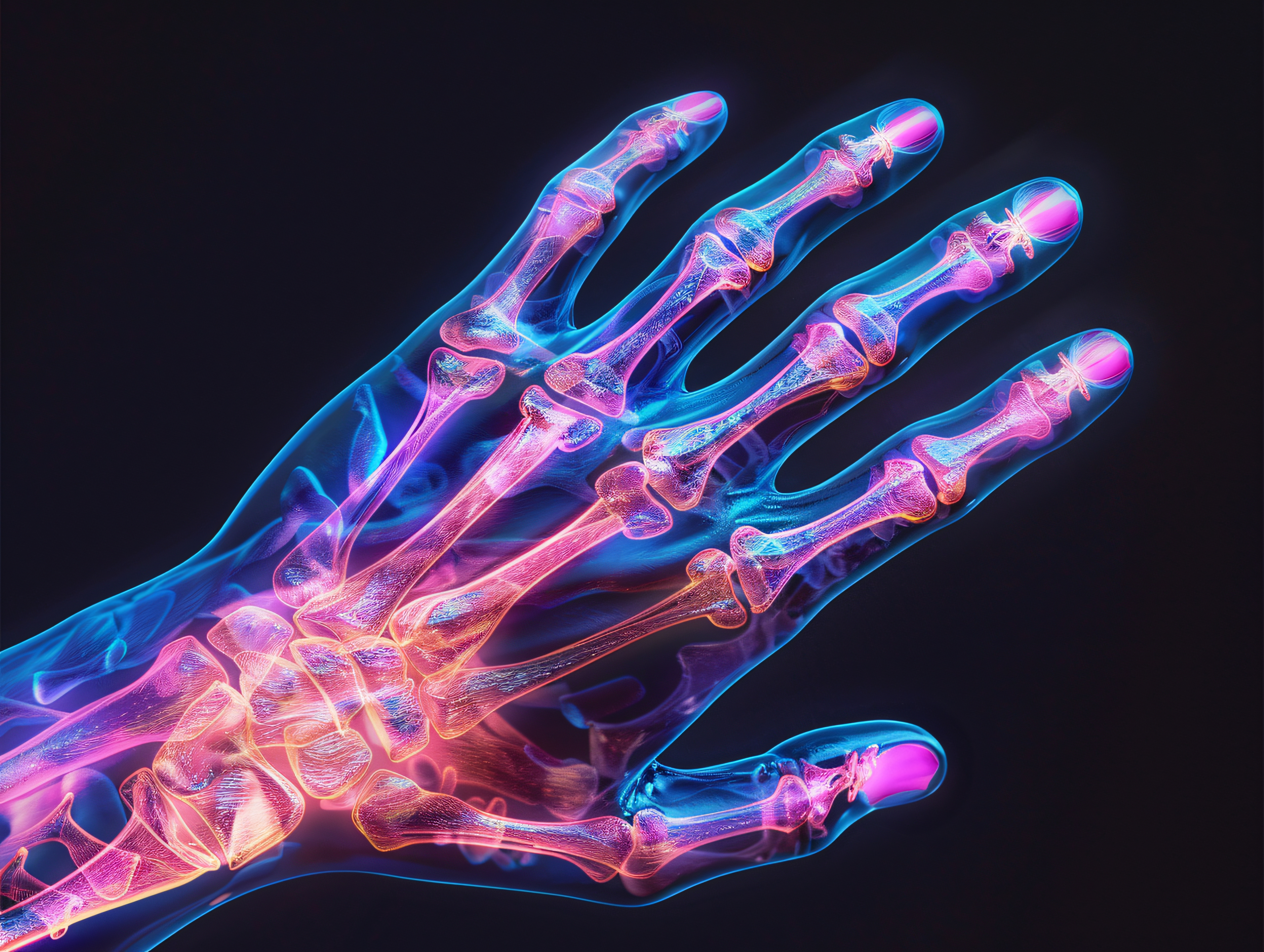
Underdevelopment of the radius bone
Radial hypoplasia is a disorder of the upper limb with an frequency is estimated at 1:30,000 - 1:100,000 live births. It is an extremely rare condition in which there are functional deficits resulting from the partial or complete absence of the radius bone. Congenital underdevelopment of the radius bone manifests as deformity of the hand and wrist, deviation of the wrist, reduced grip strength, deformity or shortening of the forearm and thumb. Underdevelopment of the radius bone, symptoms and complications that occur in his case are severe and require assistance. It is a condition that makes it difficult to function normally, since in many cases the hands are right at the elbows.
Affected individuals have bilateral deformity (both hands). Radial club hand(RCH) is usually associated with other deformities and deficiencies of the upper extremities, including:
-
Absent or hypoplastic thumb;
-
TAR team;
-
Fancomi anemia;
-
Holt-Oram team;
-
Association VACTERL,
Radial Club Hand was originally classified by Bayne and Klug according to radial bone length and degree of deficit:
-
Type 1 - Short radial bone,
-
Type 2 - Hypoplastic radial bone,
-
Type 3 - Partial absence of the radius bone,
-
Type 4 - Complete absence of the radius bone.
Radial Club Hand is an unsightly deformity that also causes significant functional impairment (caused by the absence or hypoplasia of the thumb) and instability and limited movement at the elbow, wrist and phalangeal joints. Parents of children with RCH opt for treatment immediately after birth.
The deformity of the radial bone in the RCH causes the ulna to become the primary bone of the forearm. As a result, there is little or no support for the wrist (wrist joint) on the radial side. In addition, the wrist can be completely removed from the ulnar bone. When the wrist and fingers are flexed, the flexion force causes radial deviation of the hand and displacement of the wrist (palmar side). People with RCH have poor grip strength due to lack of support and shortening of the forearm, which results in shortened muscles. To understand this, try bending your wrist downward, palm side down, and then clench your fist. You will find that it is much more difficult to clench your fist than with your wrist in a neutral position.
Although children who have RCH (especially unilateral) adapt to the condition, there are of course functional deficits that limit activity, Movement of the elbow joint may be reduced or the joint may be immobilized in extension. Movement of the wrist and fingers is limited, with a deficit is most severe in the index finger and progressively smaller in the other fingers.
Patients with RCH often have no thumbs or hypoplastic thumbs. Spaces are often created between adjacent fingers, which are useful for handling small objects but are useless for grasping larger ones. The shortened length of the forearm reduces the patient's reach. Activities involving the use of two hands are difficult to perform when the healthy limb must be next to the shorter limb. When both limbs are involved, activities are made much more difficult by the lack of at least one upper limb of equal length.
For these reasons, surgical treatment is often required. At the Paley Institute, we combine RCH along with Ulnarization surgery, a technique modified by Dr. Paley from an earlier surgery called Radialization. With Ulnarization surgery, we can safely correct Radial Club Hand without recurrence and reduce the risk of complications and restore the function and appearance of the patient's hand.
Treatment of underdevelopment of the radius bone
What is the course of radial underdevelopment, treatment and subsequent rehabilitation? Our pediatric orthopedics does not focus on centralization and radialization, techniques that are associated with a high probability of complications. At the Paley European Institute, we treat underdevelopment of the radius bone using ulnarization. This is a method created by Dr. Paley that involves moving the hand to the ulnar side of the ulna bone, which restores muscle balance.
TREATMENT STRATEGY
Over the years, many surgical procedures have been developed to deform the Radial Club Hand. Some of these procedures include:
-
Centralization;
-
Distraction;
-
Distal ulnar bone osteotomy;
-
Radialization.
Centralization is a technique in which the wrist is over the center of the distal end of the ulnar bone. For many years, this was the gold standard of RCH treatment. Nevertheless, treatment was affected by partial or complete return of the RCH deformity.
As an alternative to Centralization, Buck-Gramako proposed a radialization procedure. With radialization, the bones of the hand and wrist are displaced to the ulnar side of the ulna. In addition, the extensor and flexor radialis (FCR) tendons are moved to the ulnar side, in order to weaken the forces of radial deviation and strengthen the strength of the ulnar bone. The name radialization refers to the transformation of the ulnar bone into radial bone. The Buck-Gramacko technique has resulted in significantly lower recurrence rates compared to Centralization. The radialization technique proceeds as follows:
-
Create support points for the radius bone and deflect forearm forces without interfering with wrist mobility.
-
Balancing the muscle strength of the wrist on the radial and ulnar sides using tendon transfer.
In 1999, Dr. Paley developed a new procedure to treat RCH based on a modification of Buck-Gramacko radialization. He called the procedure Ulnarization to describe the direction of movement of the wrist in relation to the forearm (ulna bone) and to distinguish it from radialization, which is performed differently.
The Ulnarization procedure developed was based at times on Dr. Paley's observations of the radialization procedure. First, radialization is performed through a dorsal (upper palmar) incision, resulting in absent or poor visualization of neurovascular structures, as well as excessive delamination of the ulnar bone.
In Dr. Paley's Ulnarization, the incision is palmar (palm side), which allows visualization of the neurovascular structures of the hand and limits ulnar delamination of the ulna. Second, the tendons of the extensor and radial flexor muscles, which are transferred to balance the wrist in the radialization procedure, are usually absent and thus unavailable for transfer. In the ulnation technique, the flexor carpi ulnaris (FCU) is transferred to balance the wrist balance. Unlike other tendons, the FCU is always present and never hypoplastic. Finally, the term radialization is confusing in English. Ulnarization more accurately describes this procedure.
Radial hemimelia also requires physiotherapy, which is an important part of the treatment process at the pediatric orthopedics At Paley European Institute. Radial hemimelia, rehabilitation and post-treatment activities includes an entire recovery plan. So we provide not only orthopedic care, but also support during recovery. Feel free to contact us!
See other entries
How to Properly Care for a Stump After Amputation? A Practical Guide
Hollow Foot – Symptoms, Causes, and Treatment Options