Paget's disease
INFORMATION
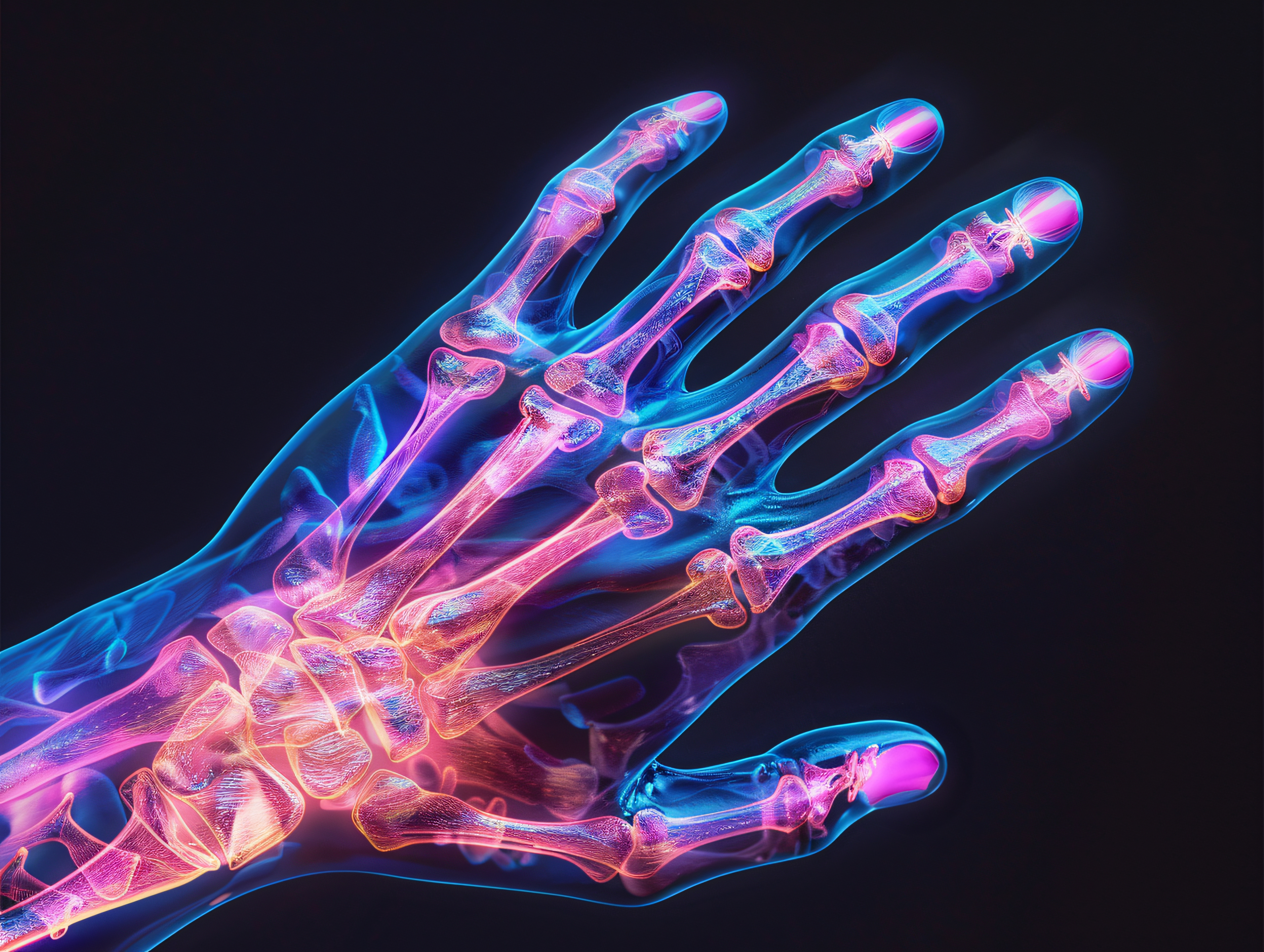
Paget's disease is a metabolic bone disease most likely caused by a virus, leading to abnormal bone resorption and formation. It is most common in the elderly. Paget's disease leads to bone deformities and fractures, as well as arthritis in the hip and knee joints.
People affected by this disease experience abnormal bone breakdown, followed by abnormal bone formation. The new bone is larger, but weaker and filled with blood vessels. This causes pain, bone deformation, fractures and arthritis. In some cases, a cancer called Paget's Sarcoma can develop.
Paget's disease is usually localized to one or two bones, most commonly the pelvis, femur, humerus and lower vertebrae. Affected individuals do not show symptoms. The disease is diagnosed when there is a bone fracture, or on the basis of an X-ray taken for another reason.
The mechanism of Paget's disease is related to osteoclasts, which absorb dead bone tissue. The pathogenesis of Paget's disease is described in the following steps:
Enlarged osteoclasts at a specific bone site.
Compressive growth of osteoblasts.
Formation of new bone in a "mosaic" pattern.
Disintegration of weak bone causing a fracture.
The progression of the disease begins with increased bone resorption caused by a large accumulation of osteoclasts in a specific region of the bone. This causes a compensatory increase in the activity of osteoblasts, which form new bone. The new "Paget's bone" is formed in a mosaic pattern,
rather than the normal linear pattern of bone plaques, and replaces the resorbed bone. The new bone is weak and prone to fractures and arthritis.
TREATMENT STRATEGY
Treatment of Paget's disease is aimed at correcting bone deformities resulting from the progression of the disease. At the Paley Institute, we correct deformities with a specialized osteotomy (surgical cutting of the bone) and repair the fracture with external or internal stabilization.
Below is an example of Paget's disease treatment. The bone was cut in two places and an external stabilizer was used. The bone was gradually straightened and realigned. The regenerating bone forms a healthy bone, not a weak Paget's bone. The external stabilizer stays in place while the bone heals. When the regenerated bone is strong enough, the external stabilizer is removed.
Paget's disease can also affect surrounding joints, such as the hip or knee, causing arthritis. We can correct this with a specialized joint protection technique.
See other entries
How to Properly Care for a Stump After Amputation? A Practical Guide
Hollow Foot – Symptoms, Causes, and Treatment Options