Two parallel worlds – motherhood between treatment, everyday life, and personal boundaries
Date of entry: February 25, 2026
Motherhood rarely follows a single rhythm. However, there are situations in which family life is truly divided into two parallel worlds—home and hospital, everyday life and treatment, the needs of one child and the needs of another. In this episode of the "Medical Talks" podcast, the conversation is not about diagnoses or medical procedures, but about the experience of being a mother of three children, including twins, one of whom faces a disability.
In this article, we discuss, among other things:
-
Motherhood of children with different needs often means living in two parallel worlds.
-
treatment and rehabilitation affect the whole family, not just one child
-
A parent's attention must be divided between siblings, which can be a source of tension and guilt.
-
The "good advice" of those around us often crosses the boundaries of mothers.
-
Fatigue, fears, and the need for silence are a natural part of this journey.
-
Partnership and self-care strengthen the entire family.
Joanna Sobolewska's guest on "Medical Talks" is Ania Piśkiewicz, mother of three daughters: nine-year-old Liwia and twins Malina and Jagoda. The conversation begins on the run, literally between rehabilitation and daily chores, which accurately reflects the reality of life, where there are no ideal moments to pause. Ania talks about how her family functions while separated during treatment—she and Malina are in Warsaw, while her husband and their other daughters are 300 kilometers away, at home.
Two rhythms of everyday life: home and treatment
Ania and her family currently live in two worlds. The first is Warsaw – surgery, rehabilitation, and the bone lengthening process, which is crucial for Malina's future mobility. The second world is home, school, kindergarten, daily phone calls, and longing to be together. Ania emphasizes that Malina's disability is most "present" during treatment, during stays at the clinic. After returning home, life returns to its normal rhythm, although the awareness of this division remains.
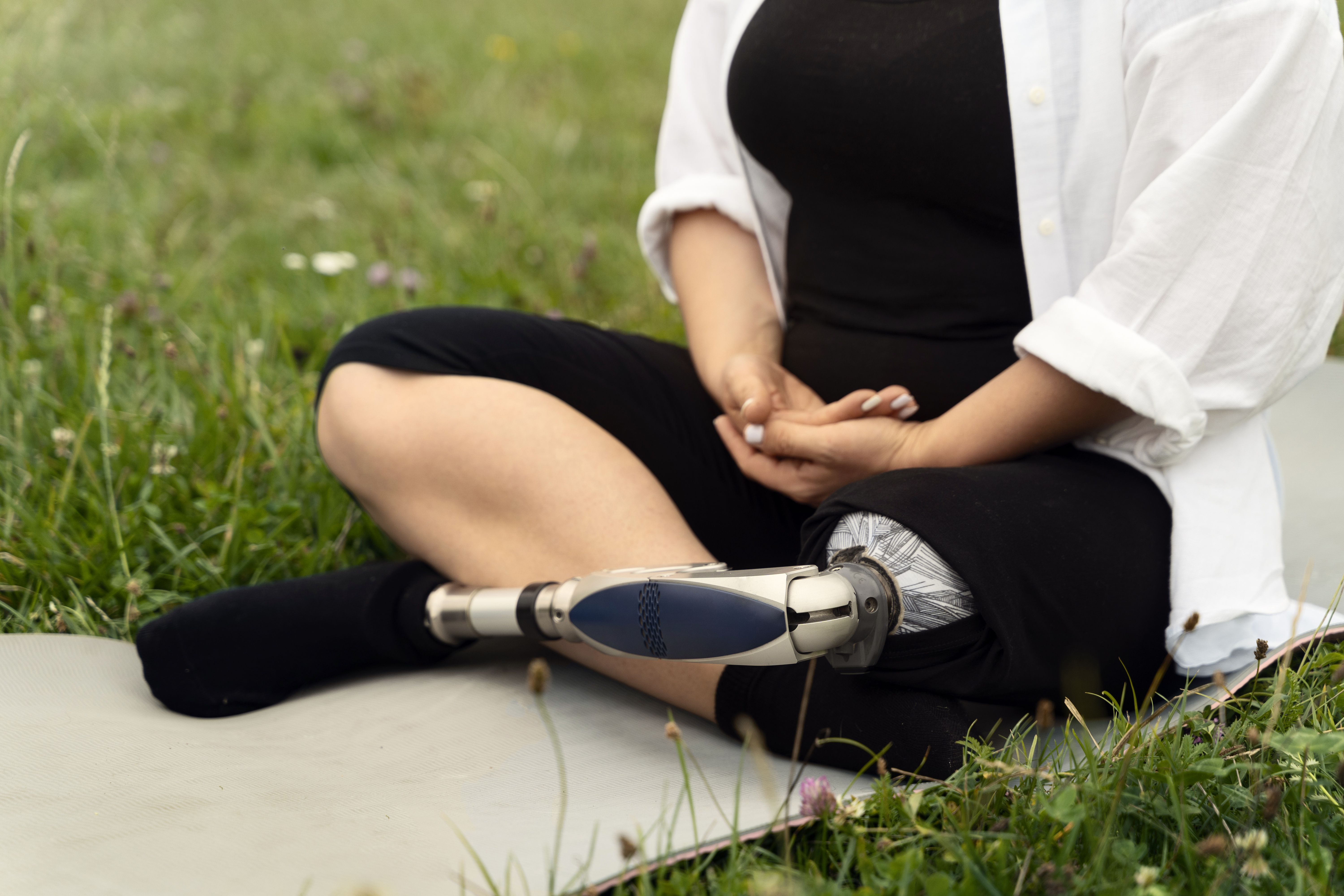
Malina's story began at birth. The girl was born with amniotic band syndrome, which forced the amputation of her leg at a very high point. Today, Malina has undergone a second bone lengthening operation – from an initial two centimeters, it has been possible to achieve about seven, which will facilitate prosthetics in the future. The process is carried out using an internal device, which Ania and Malina call a "magic wand." It is daily, demanding work, but also a great hope for greater independence.
Fatigue, boundaries, and "good advice"
Ania talks about fatigue, which does not always take the form of a spectacular crisis. More often than not, it is micro-fatigue – functioning in "turbo" mode, gritting your teeth and acting because "you have to." Work can be a form of mental respite for her, but even then, she feels the need to stop and be quiet. Setting boundaries is also a difficult topic – especially with loved ones, whose “good advice” can hurt the most.
Ania admits that she often prefers to keep quiet about a boundary being crossed rather than upset someone. Only later does she reflect on and feel tired of not saying what she felt again. The greatest burden turns out to be fears about the future—present in the background of everyday life, sometimes drowned out by activity, and sometimes simply requiring acceptance and familiarization.
Partnership, silence, and self-care
The importance of partnership is strongly emphasized in the conversation. Ania's husband does not "help" her, but is an equal participant in family life. He often gives her space to rest, talk, and get some distance. Taking care of herself does not take the form of grand gestures – it is long baths, a book, a TV series, and sometimes just silence and the idea that all thoughts are turned off for a moment.
Ania also emphasizes how important it is to feel cared for at the treatment facility. Trust in doctors and physical therapists and a family-centered approach give her peace of mind and allow her to focus on being a mom rather than constantly worrying.
The most important message that comes across in this conversation is addressed to all mothers: you don't have to be strong all the time. It's okay to be tired, to have a bad day, and to need some peace and quiet. Being a mom doesn't mean being everything to everyone—sometimes it's enough to just be yourself and dare to say, "This is too much for me."
See other entries
How to Properly Care for a Stump After Amputation? A Practical Guide

Hollow Foot – Symptoms, Causes, and Treatment Options