What are the most common postural defects?
Thanks to us, postural defects in children and adults will have no secrets from you.
Postural defects - basic information
are all deviations from normal posture. These are abnormalities that can be congenital - resulting from bone or muscle defects - or acquired, which is caused, for example, by lack of physical activity, a sedentary lifestyle or trauma. In the first case, the changes appear already in the perinatal or postnatal period. They are most often associated with clubfoot, hip dysplasia, brachial plexus palsy or torticollis. When these ailments go untreated, they can cause serious abnormalities later in life.
Acquired defects are particularly common in children who on a daily basis: carry heavy backpacks, spend many hours a day in a sitting position in the classroom, adopt abnormal postures while playing games, watching TV and playing on the computer, or wear inappropriate footwear. There are three stages in the development of postural defects:
- - functional changes (caused by overstretching or weakening of muscles),
- - Functional changes (defects affect the ligamentous and muscular apparatus; they cause spasms of muscles, tendons, ligaments and joint capsules),
- - Structural changes (abnormalities are in the form of fixed contractures and involve problems related to soft tissues and muscles that lose their properties).
What are the most common postural defects?
Postural defects can take many forms, and each requires different treatment. That's why it's a good idea to diagnose at the outset what type of condition you're dealing with. What are the types of postural defects? They are divided into:
- - lower limb defects,
- - chest defects,
- - spinal defects.
Lower limb defects include conditions such as hallux valgus foot, hallux valgus foot, hallux valgus knees, valgus knees, clubfoot or flat feet. These are ailments that not only make walking and standing difficult, but also negatively affect the entire posture of the body. Chest defects include funnel chest, a deformity in which the rib cage is flattened or concave, and chicken chest, which is distinguished by the forward protrusion of the sternum and simultaneous lateral flattening of the rib cage. The last type of postural defects is related to the spine. This group includes, among others:
- - Scoliosis - abnormalities occurring in the three planes of the spine related to movement,
- - Round back - excessive curvature of the spine directed toward the back,
- - Concave back - deepened lumbar lordosis,
- - Flat back - lack of physiological curvature of the spine.
How to recognize postural defects?
Postural defects are diseases of civilization that may be completely harmless in the initial stages. However, over time they can cause serious disease complications. That's why it's so important to treat abnormalities early on.
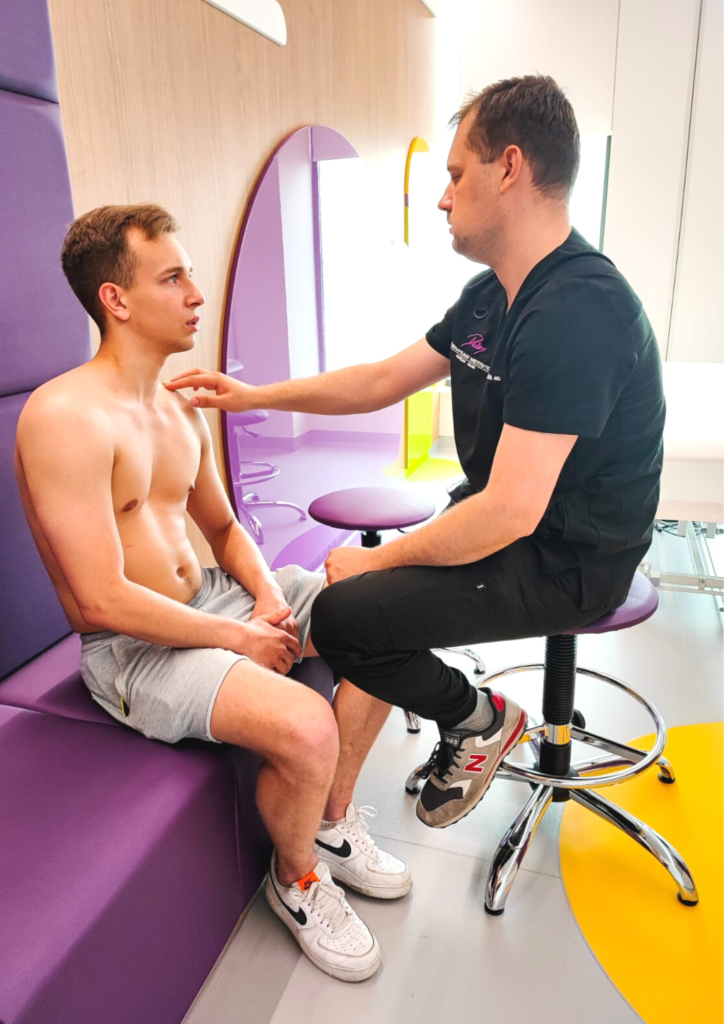
How to recognize postural defects in a child? First of all, pay attention to whether:
- - humps,
- - Has a distended belly,
- - His head and shoulders are extended forward,
- - The shoulder blades, shoulders, or pelvis are positioned asymmetrically,
- - The spine has normal curves.
If you notice a curvature or other defects, immediately contact a doctor whose specialty is pediatric orthopedics.
How to treat postural defects?
You already know what the most common postural defects are. Nevertheless, you probably have a lot of questions in your mind. Are you wondering if it is possible to fix a postural defect? Of course it is, although it is a lengthy process that requires a number of steps. First of all, you should go to an orthopedist and a physiotherapist, who, after a thorough examination, will suggest specific measures to prevent further development of the defect and enable you to cure it. The most popular and least invasive are, of course, corrective exercises. However, it may happen that the defect is too extensive and requires surgical treatment. If this is the case , it is worth consulting the Paley European Institute. At our clinic you will receive comprehensive orthopedic, surgical, as well as rehabilitation assistance. Thus, in one place you will find everything you need to enjoy correct posture again! Feel free to contact us!
See other entries
How to Properly Care for a Stump After Amputation? A Practical Guide
Hollow Foot – Symptoms, Causes, and Treatment Options