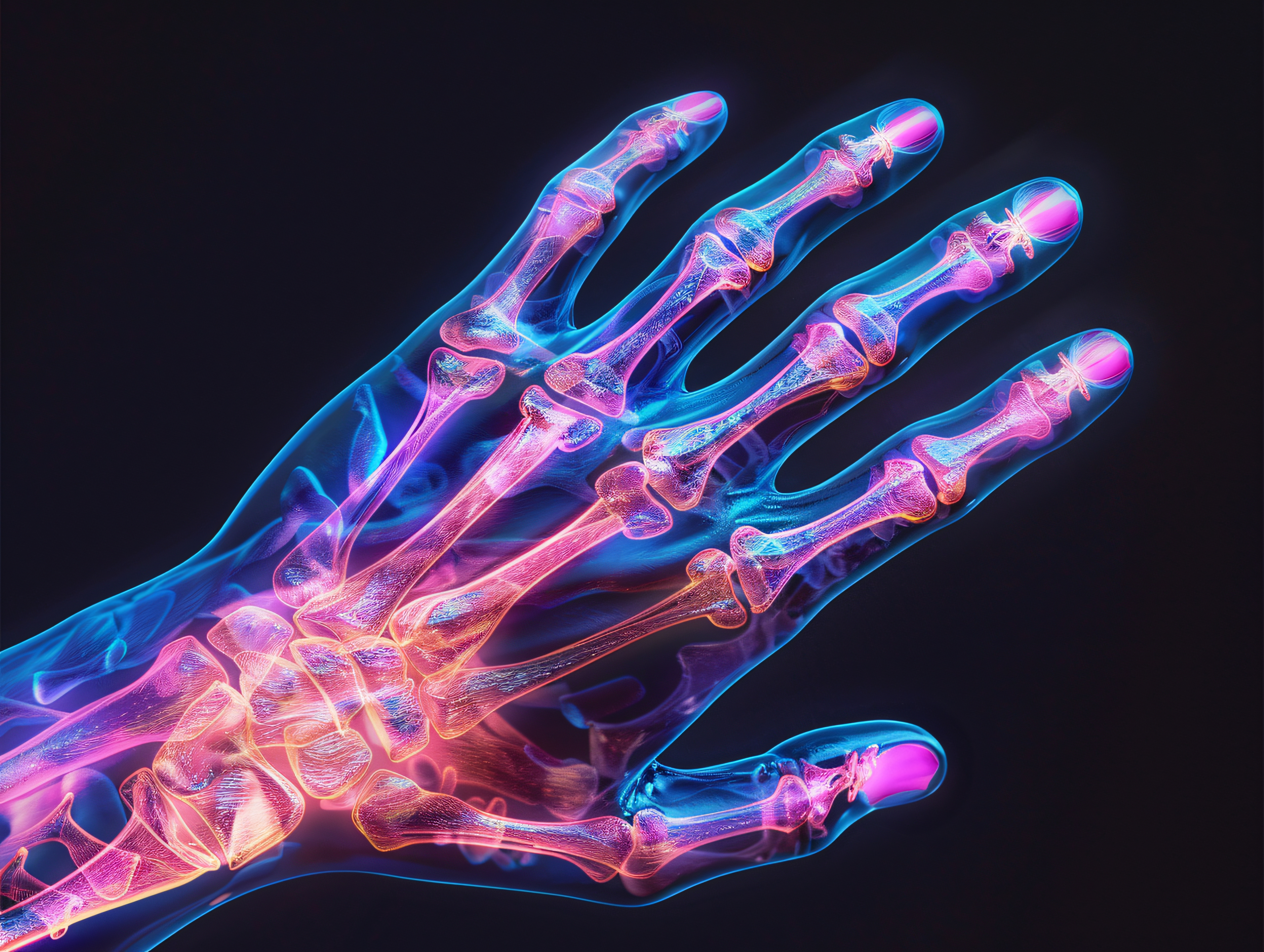
Missing fibula or tibia doesn't rule it out - learn about effective treatments for hemimelia
Fibular and tibial hemimelia: what is it?
Fibular hemimelia (FH) is a congenital disorder that manifests as abnormal bone development during the fetal period. It is manifested by the absence of all or part of the fibula. Characteristic symptoms also include deformities of the foot and knees or differences in limb length. Fibular hemimelia occurs in 1 in 50,000-135,000 births. Physical examinations, X-rays and MRIs are needed to make a diagnosis,
Tibial hemimelia (TH) is characterized by the absence, shortening or deformation of the tibia, leading to abnormalities in the ankle joints, as well as the joints of the feet and knees. In the course of the disease, the quadriceps muscles of the thigh and patella are also often absent or have limited function. Tibial hemimelia occurs in 1 in 1,000,000 live births. Tibial hemimelia is detected by prenatal ultrasonography or X-ray and postnatal evaluation.
Causes and effects of hemimelia
The causes of hemimelia are not fully understood and can be the result of many different factors. Hemimelia can result from diseases of the peripheral nerves, central nerves, muscles, and can also be a symptom of genetic disease. These disorders can have their origin in genetic factors, disorders of embryogenesis or teratogenic factors.
Embryogenesis, or the process of development of the embryo from fertilization until it becomes a fetus, is a key stage in the life of an organism. Disturbances in this process can lead to birth defects, such as hemimelia, through abnormal formation of tissues and organs. On the other hand, teratogenic factors, such as chemicals, radiation, infections or certain drugs, are external factors that can cause birth defects during pregnancy. Their negative effects on the development of
The effects of hemimelia of the tibia and fibula are varied and can affect not only the physical aspect, but also the psychological aspect of the patient. Depending on the degree of bone loss, those affected by this condition may experience different functional problems.
Difficulty walking can result from uneven limb lengths, which can lead to a lame gait or the need for orthopedic aids such as orthoses or walkers or crutches. The pain that often accompanies hemimelia can result from muscle tension, abnormal joint loading or other bone and joint deformities.
In addition to the physical challenges, hemimelia can have a profound effect on the patient's psyche. People with the condition may struggle with self-esteem issues, feeling different from their peers. They may experience feelings of alienation, frustration or sadness about their appearance or physical limitations.
Treatment methods - Paley's procedure
Treatment methods for congenital limb defects, such as hemimelia, are constantly evolving, providing patients with increasingly effective and less invasive solutions. One of the most innovative and effective approaches in this field is Dr. Paley's procedure. This approach not only offers hope for improving limb function, but also offers the chance for a better quality of life for many Patients around the world. It focuses on treating deformities, missing and abnormal lengths of lower limb bones. Treatment includes preparatory surgery until the age of three, followed by limb lengthening starting at around age five.
At Paley European Institute , we perform SUPERankle, SUPERknee, SUPERhip, and limb lengthening procedures (SUPER stands for Systematic Utilitarian Limb Reconstruction Procedure). Importantly, the choice of technique depends on the measurement of limb length and type of ailment, which is determined based on the classification proposed by Dr. Dr. Paley.
- SUPERankle comprehensive surgical treatment to reconstruct the foot and ankle joint in patients with fibular hemimelia. This procedure can be combined with lengthening depending on the age and condition of the patient.
- SUPERknee is used for knee joint instability. The procedure is designed to reconstruct the missing ACL/PCL ligament, realign the patella and ensure proper flexion contracture.
- SUPERhip is a procedure that aims to reconstruct the hip joint. It is a comprehensive treatment and correction of severe bone and soft tissue deformities.
A method of treating hemimelia is also tibial lengthening. It is performed with external braces or intramedullary nails. Want to know more details? See: fibular hemimelia and tibial hemimelia treatment.
Summary
Hemimelia, both fibular and tibial, is a serious congenital disorder affecting bone development during the fetal period. Although the causes of its occurrence are not fully known, its effects can be deeply felt both physically and psychologically for patients. However, thanks to medical advances, treatment methods such as Dr. Paley's procedures offer Patients hope for an improved quality of life.
At Paley European Institute, the emphasis is on continuous research and adaptation of the latest treatment methods. Advanced medical technologies, precise surgical techniques and a personalized approach to each patient guarantee the effectiveness of treatment, even in the most complex cases of hemimelia. Pediatric orthopedics at Paley European Institute is the key to health and fitness.
See other entries
How to Properly Care for a Stump After Amputation? A Practical Guide
Hollow Foot – Symptoms, Causes, and Treatment Options