Aesthetic limb lengthening
What is aesthetic limb lengthening?
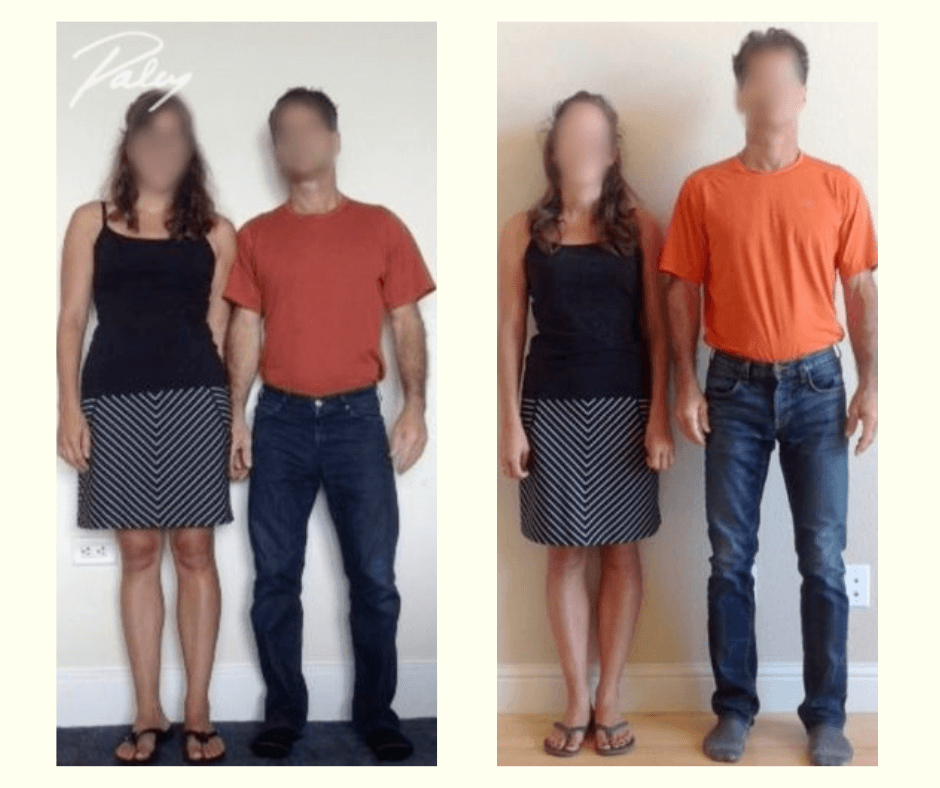
Aesthetic limb lengthening is a surgical procedure to increase the length of lower limb bones. The technology has been used for many years, but only in recent years has it become available to a wider range of patients.
The history of the procedure dates back to the early 20th century, when Russian surgeon Gavriil Ilizarov developed a method of bone lengthening, which he successfully used to treat deformities and shortened limbs in children. It later turned out that the same method could be successfully used for aesthetic purposes.
Methods of aesthetic limb lengthening
Several methods of aesthetic limb lengthening are currently available on the market. The most popular of these are:
Ilizarov method - is a traditional method of limb lengthening with an external apparatus, consisting of metal rings and rods. The apparatus is attached directly to the bone and then gradually lengthened, causing the bone to stretch and new bone tissue to form. This method is actually only of historical importance now, and lengthening of long bones using this technique is not recommended.
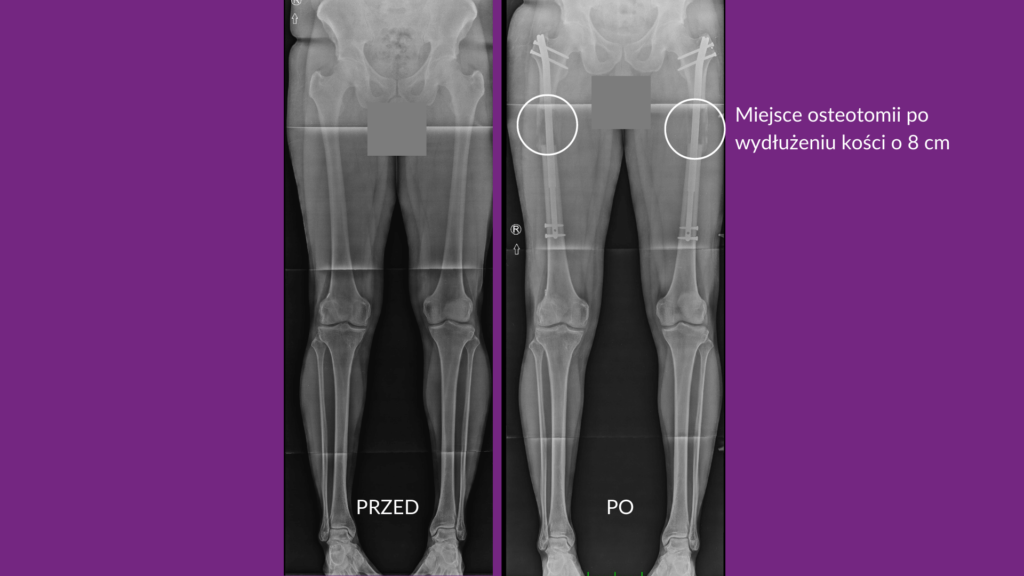
PRECiCE telescopic internal nail method - this is a modern method of bone lengthening, in which instead of braces, special implants, so-called telescopic nails, are used. Introduced into the bone (marrow canal), the nails are gradually lengthened with the help of a special device controlled by a magnetic field.
Preparation for the procedure
Before undergoing a leg lengthening procedure, the patient should undergo a thorough examination, including X-rays, to rule out any contraindications to the procedure. It is also important that the Patient is in good general condition and has a properly functioning circulatory and respiratory system.
Course of aesthetic limb lengthening procedure
The aesthetic limb lengthening procedure is carried out under general anesthesia. After a skin incision, the surgeon cuts the bone, inserts a special implant and closes the wound. The patient then undergoes a period of convalescence.
Post-operative care after surgery
Return to full function after aesthetic limb lengthening surgery takes several to several months
, depending on the method and extent of bone lengthening. The first days after surgery are a period in which physical exertion should be avoided, especially walking with full weight bearing on the lower extremities. Over time, the patient will gradually begin to put weight on the limbs.
Risks and complications
Like any other surgical procedure, aesthetic limb lengthening carries certain risks of complications, such as infection, bleeding, nerve damage or bone ischemia. Therefore, it is important to thoroughly discuss all aspects and possible risks of the procedure with your doctor before proceeding.
Summary
Aesthetic limb lengthening is a complex and challenging surgical procedure, but for many people it can provide an important aesthetic solution and improve quality of life. Therefore, before deciding on the procedure, it is essential to thoroughly understand all the methods and principles of the procedure, as well as to discuss with the doctor any issues related to risks and complications.
When choosing a center to perform aesthetic lower limb lengthening, be sure to ask how many operations it performs each year and whether it is qualified and experienced in this type of surgery. Also, whether it has the right team that knows how to properly care for the patient during limb lengthening. Lengthening procedures should not be performed by centers that deal only with sports medicine or trauma surgery and only dedicated facilities where everything is subordinated to the patient.
At Paley European Institute, we perform cosmetic limb lengthening. This is a procedure designed both for patients who wish to grow a few extra inches, but also to treat limb inequalities or other health challenges such as achondroplasia. Our specialty is also pediatric orthopedics - we help the youngest regain full mobility. Feel free to contact us!
See other entries
How to Properly Care for a Stump After Amputation? A Practical Guide
Hollow Foot – Symptoms, Causes, and Treatment Options